Operations & Logistics
Parade Road Closures and Traffic Management
How to plan parade road closures: the traffic management plan, closure sequencing, detours, intersection control, barricades, and emergency access.
Road closures are where your parade lands hardest on people who never signed up for it. Close too early and the businesses along the route lose a morning of trade. Close too late and your crews are dragging barricades through live traffic while units try to stage around the backup. A parade traffic management plan is where you settle all of it on paper, alongside the rest of your parade planning timeline, months before anyone touches a barricade.
Most cities will not issue a special event permit for a route on public streets until they have approved that plan. Treat it as a working document, not a permit formality. The crew setting barricades at 5 a.m. should be working from the same map the fire marshal signed.
What goes in the plan, and who approves it
A traffic management plan (some jurisdictions call it a traffic control plan) is a map, a schedule, and a staffing chart bound together. The map shows every closed segment, every barricade point with the device type at each one, and the signed detour routes. The schedule gives a closure time and a reopen time for each segment, not one blanket window for the whole route. The staffing chart names who controls each intersection: officer, flagger, or barricade attendant.
📋 Traffic management plan contents
- Closure map with every barricade point and device type
- Closure and reopen schedule, segment by segment
- Signed detour routes for through traffic
- Resident and business access plan
- Intersection control assignments (officer, flagger, or attendant)
- Emergency vehicle access plan with designated crossing points
- No-parking posting schedule and tow policy
- Notification plan for residents, businesses, and transit
- Day-of contact list with radio channels
Approval runs through whoever owns the road. For city streets, that is public works or traffic engineering, with the police department signing off on staffing and the fire department reviewing emergency access. If any part of your route touches a state highway, the state DOT gets involved, and their review can take 60–90 days, so start that application first. Larger cities expect the plan drawn to MUTCD standards (the federal manual governing signs and traffic control devices), and some require a certified traffic control contractor to prepare it. In a small town, the whole approval might happen in one meeting with the police chief and the public works director. Either way, get the approved version in writing and distribute it to everyone working closures.
Close in stages, reopen behind the parade
A single hard closure time for the entire footprint is the lazy version, and it costs every resident and business an extra hour or two for nothing. Sequence it instead.
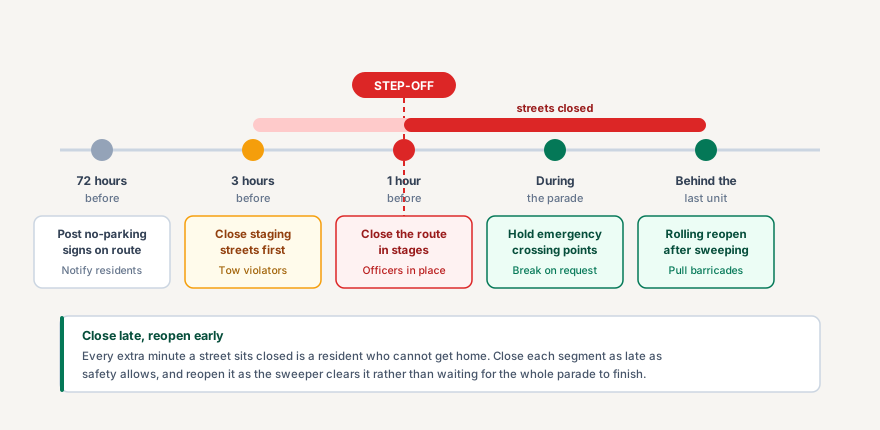
Staging streets close first, typically 2–3 hours before step-off, because you cannot line up 80 units on a street carrying live traffic. The route itself closes in stages after that, usually 60–90 minutes out, working from the staging end toward dispersal. Cross streets that intersect the route close last, often 30–45 minutes before step-off, since they only need to be clear once units are actually moving.
Reopening should roll behind the parade. Once the last unit and your sweep vehicle clear a segment, cleanup moves through, barricades come down, and that segment reopens while the parade is still running a mile ahead. On a mile-and-a-half route, a rolling reopen hands the first blocks back to traffic more than an hour before the dispersal end clears. Assign a reopen crew that follows the sweep vehicle; do not wait for a single "all clear" call at the end.
Timing the whole window starts with step-off itself. A Saturday morning step-off closes streets before retail traffic builds. A Sunday morning parade collides with church services along the route, and an evening parade collides with the commute. Check what your route actually hosts on your chosen day before you lock the time, and coordinate bus detours with the transit agency 4–6 weeks out.
Detours for through traffic, access for everyone else
Through traffic and local access are two different problems. Solve them separately.
Through traffic gets a signed detour. Route it on streets that can absorb the volume, place the first detour signs far enough upstream that drivers can commit before they are stuck, and put changeable message boards on the major approaches 48–72 hours ahead so regular commuters adjust in advance. Drive the detour yourself with fresh eyes: a route that makes sense on the map can dead-end at a Saturday farmers market. And never let the detour cross the route or feed into your staging area.
People who live and work inside the closure need an access plan, not a detour. Pick specific local-access points, staff each with a barricade attendant holding a list of the blocks that point serves, and let residents in and out during the closed-but-not-parading window. Be straight with the addresses that will be fully landlocked while units are moving: put the exact window in the mailer so they can move a car outside the footprint the night before.
Who controls each intersection
There is a hierarchy here, and in most jurisdictions it is not negotiable.
Police officers take signalized intersections. In most states, only a sworn officer can legally direct traffic against a signal, which is exactly what parade operations require. Certified flaggers (trained to your state DOT's flagger certification) can hold unsignalized intersections and mid-block closure points. Volunteers watch barricades: they answer questions, keep pedestrians from wandering into the route, and radio in when a driver moves a barricade. That is the whole job.
⚠️ Warning
Never let a volunteer direct traffic, even for one car, even at a quiet intersection. An unauthorized person waving vehicles through is a liability your event insurance will likely not cover, and if a driver follows their signal into a collision, your organization owns the outcome. Volunteers watch barricades. Officers and certified flaggers move cars.
Rank your intersection posts honestly when you build the staffing chart. Every parade has a post that gets labeled least important, and it is usually the one controlling the back way into staging. Leave it vacant once because somebody called in sick, and you will spend the whole morning untangling staging traffic. Put your most reliable people on the posts that protect staging, and re-brief the police detail each year on why those posts exist, because the officers rotate even when the route does not.
Barricade types and placement
Match the device to the job. Type I and Type II barricades (the small folding A-frames) mark closure points on low-speed local streets. Type III barricades, the full-width frames, are for hard closures at the main entry points to the route, where you need a driver to understand the street is shut, not merely discouraged. Cones handle tapers and lane shifts. A cone is a suggestion; a barricade is a closure. Never close a street with cones alone.
At entry points where a vehicle could reach the crowd at speed, use something with mass: water-filled barriers, or city dump trucks and plow trucks parked nose to tail. Vehicle mitigation at those points is now standard practice at larger events, and many police departments require it as a permit condition.
Placement is a counting exercise. Walk the route and list every intersection, alley, and parking lot exit that opens onto it; each one needs a device and most need an attendant. Organizers routinely miss alleys, and one pickup truck backing out of an alley into a marching band is the incident report nobody wants to write. Reserve barricade rentals 6–8 weeks out, because every event in the region wants the same inventory on the same weekends.
Emergency vehicle access
Fire and EMS do not stop responding because you have a parade, so the plan has to move them through it. Work with the fire department to designate emergency crossing points every few blocks, chosen where the route is wide and a gap is easy to open. Where street width allows, keep a 20-foot clear lane along the route, and stage an ambulance inside the closure so a spectator emergency does not require crossing at all.
Then there is the rule that surprises new organizers: the parade breaks for emergency crossings. Always. When an emergency vehicle needs to cross, the marshal at the designated point stops the next unit, holds the gap open while the vehicle passes, and restarts the parade. Write the procedure into the marshal briefing, name the radio call, and rehearse it verbally at the pre-parade meeting. A 90-second, well-run break is invisible to the crowd. A confused one is dangerous.
Tell people before you take their street
Notification is cheap; anger is not. Mail or hand-deliver a closure notice 2–3 weeks ahead to every address on the route and within a block of it: dates, exact closure and reopen times by segment, the no-parking rules, and a phone number. Visit route businesses in person, give them the peak closure window, and suggest they post "We're open, enter from [side street]" signage for the day.
Post the no-parking signs and closure notices on the street 48–72 hours ahead. Many towing ordinances require posted notice 24–72 hours in advance for a tow to be enforceable, so this is a legal requirement as much as a courtesy. Back it all with a closure map in the local press and on your social channels, and publish conservative reopen times you can beat.
The tow plan
Somebody will leave a car on the route. Decide in advance what happens to it, because improvising at 6 a.m. with a marching band inbound goes badly.
Run a sweep of the route 3–4 hours before step-off with a police unit and tow trucks already staged, not on call. Photograph every vehicle before it moves, and log the plate and destination so the owner can find it through the police non-emergency line.
💡 Pro Tip: Relocate, don't impound
Ask the city to authorize relocation tows: the car goes to a legal space a block or two away instead of the impound lot. It is faster for your crew, saves the owner a triple-digit impound bill, and turns a furious phone call into a mildly annoyed one. Most owners genuinely forgot; the tow policy should assume that.
Frequently asked questions
How far in advance do roads close for a parade?
Staging streets close first, about 2–3 hours before step-off. The route itself typically closes 60–90 minutes out, and cross streets 30–45 minutes before the parade starts. Streets reopen on a rolling basis behind the last unit, so early-route segments often reopen while the parade is still running.
Who approves a parade road closure?
The agency that owns the road: city public works or traffic engineering for local streets, the state DOT for state highways. Police approve intersection staffing and fire reviews emergency access, all under your special event permit. Expect 60–90 days of lead time when a state route is involved.
Can volunteers direct traffic at a parade?
No. In most jurisdictions only sworn police officers can direct traffic at signalized intersections, and certified flaggers handle unsignalized points. Volunteers are limited to watching barricades, assisting pedestrians, and reporting problems by radio. A volunteer waving cars through creates liability your insurance will likely not cover.
What happens to cars parked on a parade route?
If no-parking signs were posted the required 24–72 hours in advance, vehicles left on the route are towed during a sweep a few hours before step-off. Many parades use relocation tows, moving the car to a nearby legal space instead of an impound lot. Owners can locate their vehicle through the police non-emergency line.
How do emergency vehicles get through during a parade?
The traffic plan designates emergency crossing points every few blocks, and the parade stops to open a gap whenever fire or EMS needs to cross. Marshals hold units back, the vehicle passes, and the parade restarts, usually within about 90 seconds. Many parades also stage an ambulance inside the closure so spectator emergencies are handled without crossing at all.